Across cities in Europe, colder weather brings an urgent and familiar reality: dropping temperatures drive up heating demand, vehicle exhaust hangs in cooler air, and seasonal pollution spikes return to city streets. For city leaders, tackling air quality is about far more than meeting environmental targets. It directly shapes how residents travel every day, the warmth and safety of their homes, and the health of the air they breathe.
A citywide priority for Sofia
During the city’s inaugural Clean Air Week, Sofia showed how it is tackling this crisis at the source by targeting the main emitters, transport and domestic heating. By introducing the region’s first dual Low Emission Zones targeting both transport and domestic heating, Sofia has established itself as a pioneer in urban climate and health action across Southeastern Europe.
“[Air quality] is perhaps the most unifying thing for all of us. It doesn’t matter whether you’re young, old, rich, poor, what you do in life, we all breathe the same air, and it has very big impacts on how much we live and what’s the quality of our life, of our children’s lives.” – Vassil Terziev, Mayor of Sofia
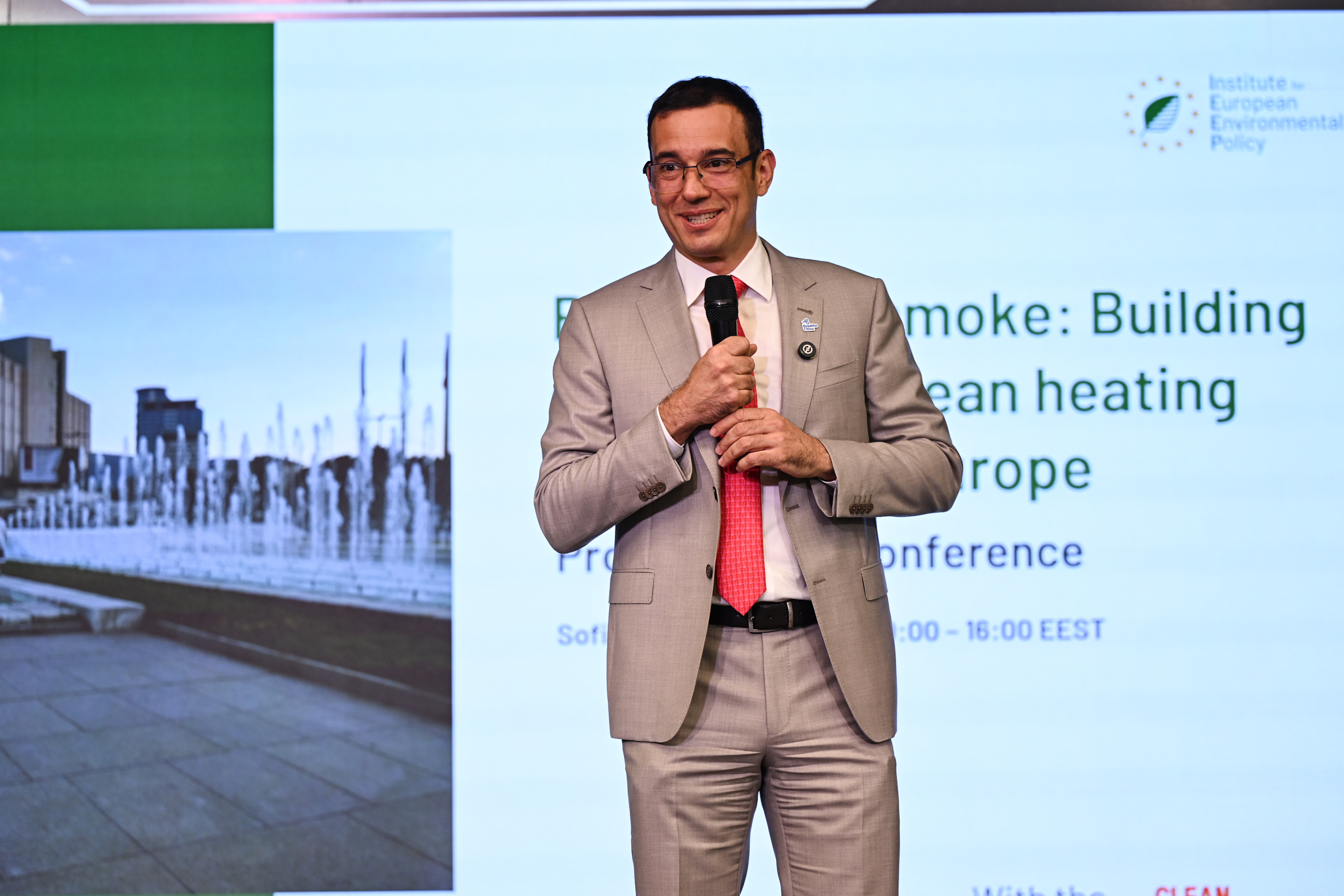
© Breathe Cities / Mayor Vassil Terziev delivers opening remarks at the “Beyond the Smoke: building support for clean heating measures in Europe” conference.
Taking decisive action requires local governments to navigate real political friction and work directly with residents. At the Beyond the Smoke: building support for clean heating measures in Europe conference, organised by the Institute for European Environmental Policy, Mayor Vassil Terziev stressed that city leaders need the courage to make bold choices today so they can look back years from now knowing they did what was right for their residents.
Mayor Terziev used Clean Air Week to demonstrate his commitment to bold choices: announcing his ambition to extend the city’s transport LEZ from operating in winter only to all-year-round, and support for almost 11,000 additional households to access clean heating, helping more families transition away from wood and coal burning.
For residents, these additional measures are not only about clean air targets and reduced traffic congestion – they mean more liveable neighbourhoods and improved health. New data from work supported by Breathe Cities shows the transport LEZ helped achieve an almost 20% reduction in emissions of harmful pollution last winter.
Adapting solutions to leave no one behind
Breathe Cities organised a site visit to Fakulteta, Sofia’s largest Roma neighbourhood, for a delegation of local and international city officials to see the important work local organisations are doing to tackle air pollution and energy poverty.
Supported by Breathe Cities, the project works directly with residents to understand the challenges posed by informal housing and introduce safer, healthier alternatives to wood and coal burning. Led by Trust for Social Achievement (TSA), the pilot is helping 10 households transition from solid-fuel stoves to electric heaters and air conditioning units.
Homeowners showed visitors around their properties and shared what motivated them to switch to electric, from practical convenience to the safety of their children and visibly seeing the health impacts of burning. Alongside home heating upgrades, TSA worked with the community to build a playground, creating the neighbourhood’s only dedicated green space, which is critical for children’s health and outdoor play.
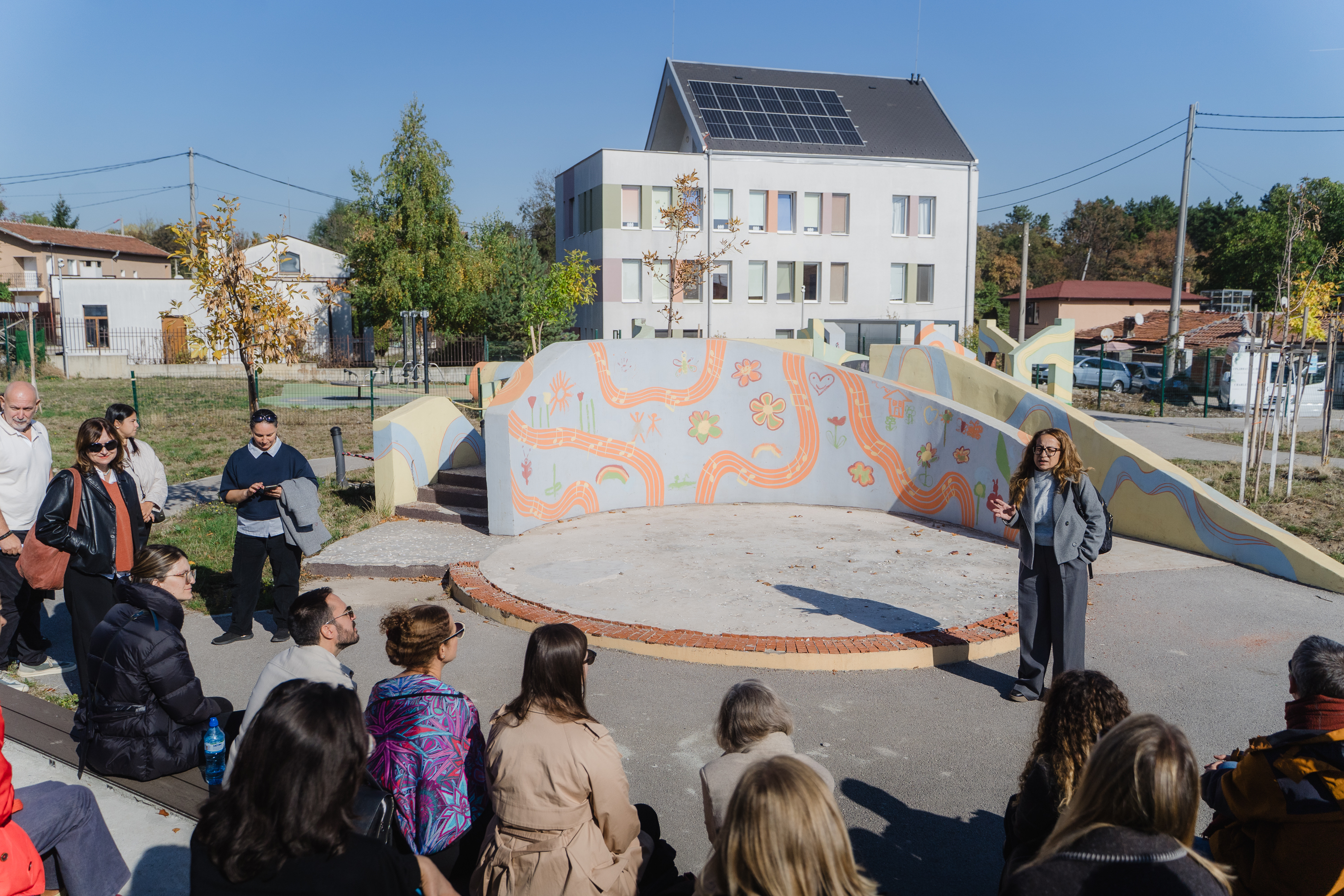
© Breathe Cities / Delegates visit Fakulteta, Sofia’s largest Roma neighbourhood, to see the community’s new playground and green space.
To put monitoring tools directly into the community’s hands, TSA established an independent local evidence base:
- Seven air sensors and five strategic cameras were mounted across the area to track pollution levels and monitor winter burning patterns.
- 18 local residents were trained as “waste watchers” to document and report uncontrolled waste and fuel burning.
The visit also highlighted a critical policy barrier: standard municipal heating subsidies require formal property deeds, which excludes families living in informal housing. By demonstrating practical solutions on the ground, the work with the community has begun changing the municipality’s views and policies, helping ensure that future city schemes adapt their rules so no community is left behind.
Learning from European peers
Sofia is not tackling these challenges alone. Breathe Cities hosted city officials from London, Milan, Paris, Warsaw, Bucharest and Madrid for a peer-to-peer exchange focused on the realities of reducing emissions from domestic heating. City representatives compared proven solutions, exchanged strategies for overcoming operational hurdles, and highlighted what works best in their local programmes.
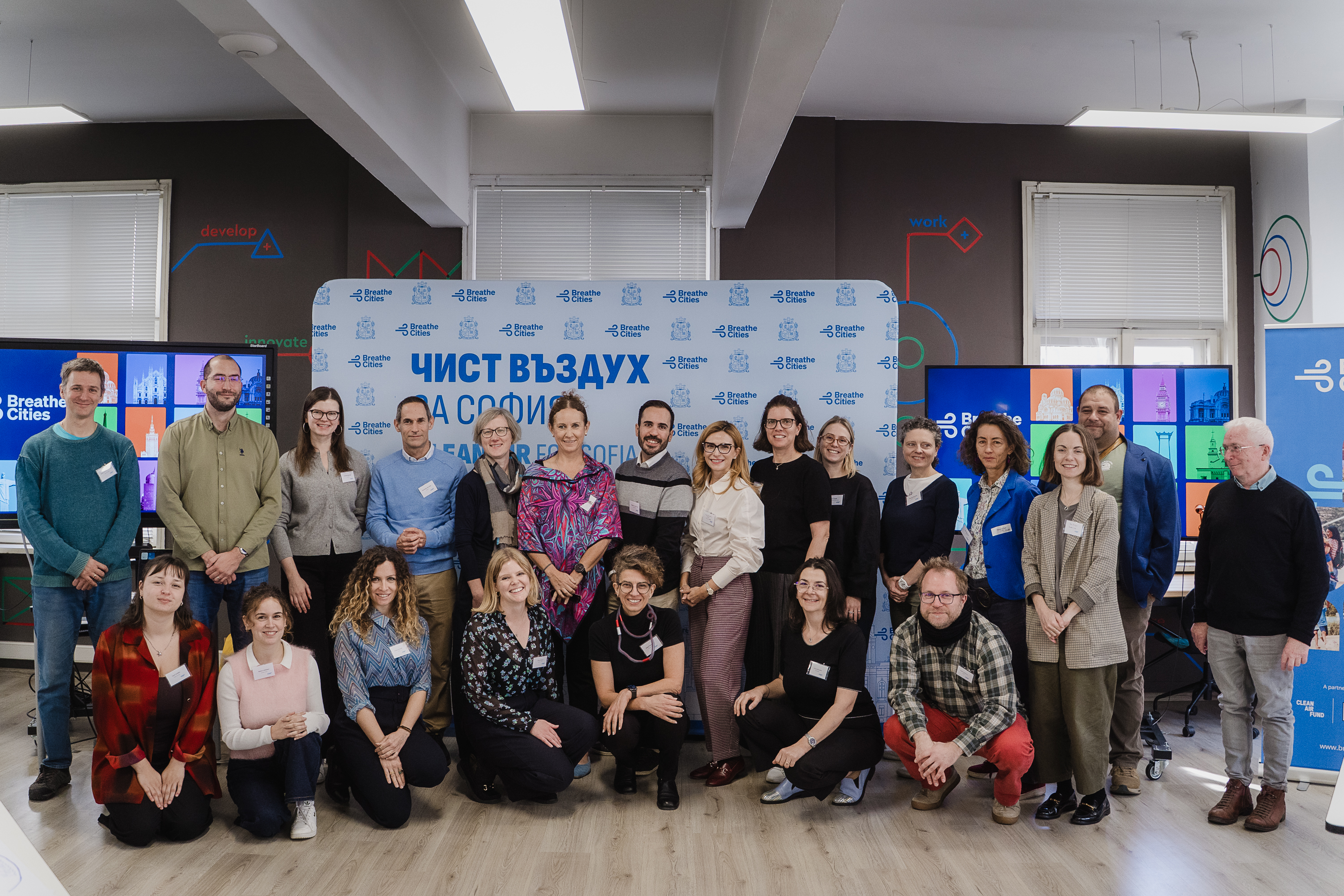
© Breathe Cities / City representatives from across Europe gather in Sofia for a peer-to-peer exchange on reducing domestic heating emissions.
These practical lessons fed into a policy roundtable bringing together policymakers, legal experts and civil society organisations. Using Sofia’s dual clean air zones and local work as case studies, participants explored how clean heating policies can be designed with direct insight from residents. The discussion showed how clean heating can serve as an entry point for wider neighbourhood improvements, from public mobility to healthier public spaces.
“This is a great moment to celebrate Sofia’s progress towards cleaner air – it is a city that others should look towards for proof that bold, evidence-based action works. The city’s transport and domestic heating low emission zones are reducing pollution at the source and improving the health of its residents. And as one of the 16 cities in the Breathe Cities initiative, Sofia is working internationally to share its knowledge and help accelerate global action.” – Cecilia Vaca Jones, Executive Director, Breathe Cities
The city deepened its international ties during Clean Air Week by joining over 50 cities globally in the C40 Clean Air Accelerator, and signing a new Memorandum of Understanding committing the municipality to the next phase of Breathe Cities.
Looking to the future
Sofia’s progress demonstrates that clean air leadership is ultimately defined by delivery. By confronting the city’s primary emissions sources head-on while ensuring the most exposed communities are not left behind, Sofia is setting a new standard for action on clean air across the region. The road ahead requires continued resolve, but the capital has shown that combining political courage with community insight creates a clear pathway to a cleaner, healthier city for all.