How Clean Air Zones Are Breathing New Life Into Neighbourhoods
If you share our commitment to clean air and would like to hear news from Breathe Cities, sign up to our email updates.
You can opt out at any time. To read our full Privacy Policy, please click here.
A Clean Air Zone is a designated area where a city implements targeted measures to reduce air pollution, control emissions and protect public health. Originally, most Clean Air Zones focused primarily on vehicle access, limiting which vehicles could enter certain areas based on their emissions.
Today, the most ambitious zones take a broader approach, bringing together action across multiple sectors to tackle pollution as a whole. By coordinating investments in greener spaces, clean heating, active mobility infrastructure (such as bike lanes) and emissions controls, cities can transform highly polluted neighbourhoods into safer, more resilient public spaces. Combining these measures allows local governments to maximise their impact and directly reduce exposure for the residents who need it most.
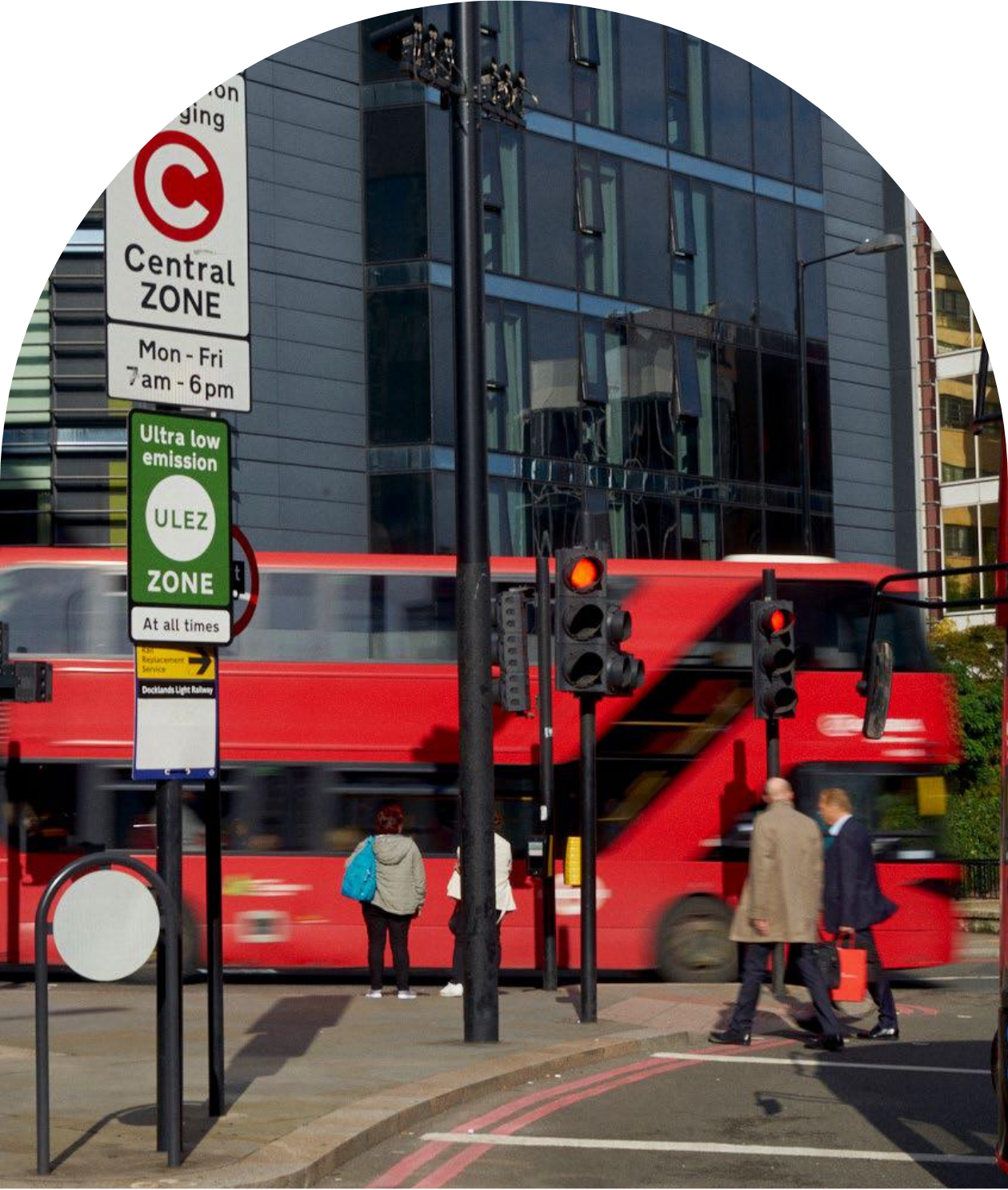
Clean Air Zones are also known by different names in different cities: London’s Ultra Low Emission Zone (ULEZ), Bogotá’s Zonas Urbanas de Mejor Aire (ZUMA) and Jakarta’s Kawasan Rendah Emisi (KRE-T) are examples. But all share the same goal: reducing residents’ exposure to air pollution and making cities healthier places to live.
A Clean Air Zone is a defined area of a city where targeted measures are introduced to reduce air pollution and protect public health. Clean Air Zones allow cities to focus interventions where they can have the greatest impact. These can include cleaner transport, construction, and heating, or urban greening and other measures that address major sources of air pollution.
Clean Air Zones are referred to by different names in different cities: London’s Ultra Low Emission Zone (ULEZ), Bogotá’s Zonas Urbanas de Mejor Aire (ZUMA) and Jakarta’s Kawasan Rendah Emisi (KRE-T) are all examples. The measures involved vary too, but all share the same goal of reducing residents’ exposure to air pollution and making cities healthier places to live.
Low Emission Zones are one example of a Clean Air Zone. Many European cities introduced them as an early approach, focusing on restricting the most polluting vehicles from entering a defined area. Today, cities are increasingly taking a more holistic view, combining vehicle measures with urban greening, clean heating and active travel infrastructure to tackle pollution from multiple sources at once.
Clean Air Zones help cities to reduce air pollution and protect public health in areas where people face high levels of exposure. By focusing action within a defined area, cities can bring together measures that tackle multiple sources of pollution and respond to local conditions. Clean Air Zones can also help cities turn broader clean air commitments into targeted, measurable action that improves the places where people live, work and spend time.