Download the Spanish Press Release
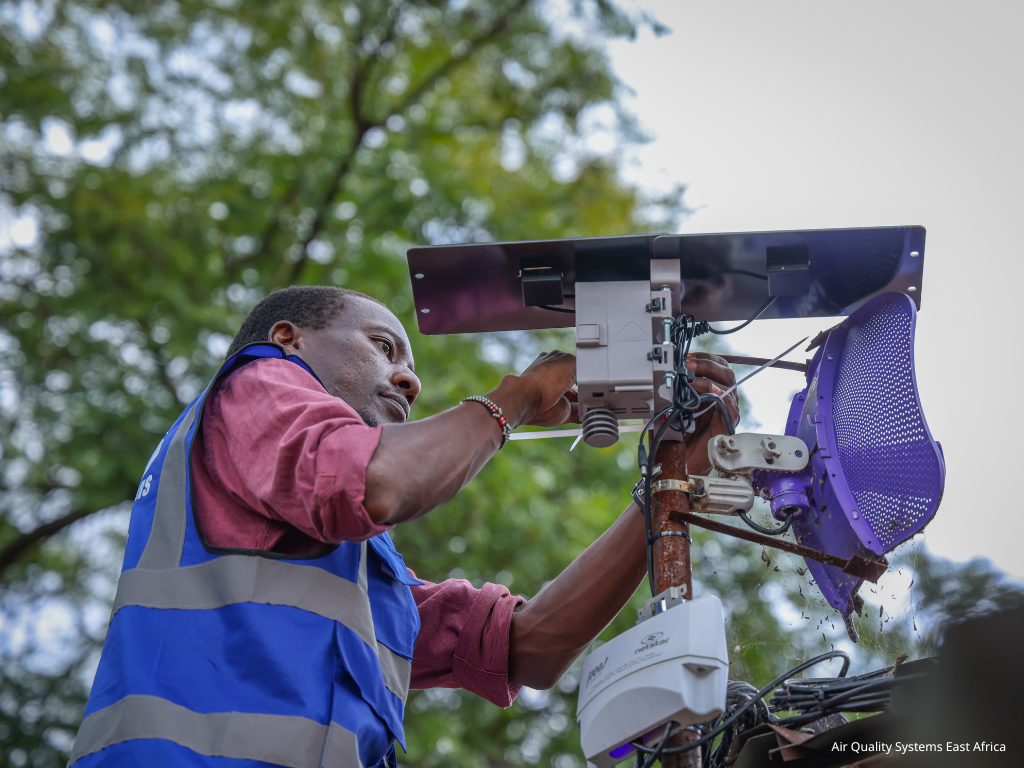
The Secretary of Environment, Lic. Julia Álvarez Icaza Ramírez, today announced the first phase of the city’s first low-cost air quality sensor (LCS) network, with support from Breathe Cities, a global initiative delivered by Bloomberg Philanthropies, Clean Air Fund and C40 Cities to help cities clean the air and protect public health. Mexico City’s new monitoring network will generate real-time, hyperlocal air quality data to help identify pollution exposure risks and inform data-led interventions to safeguard public health.
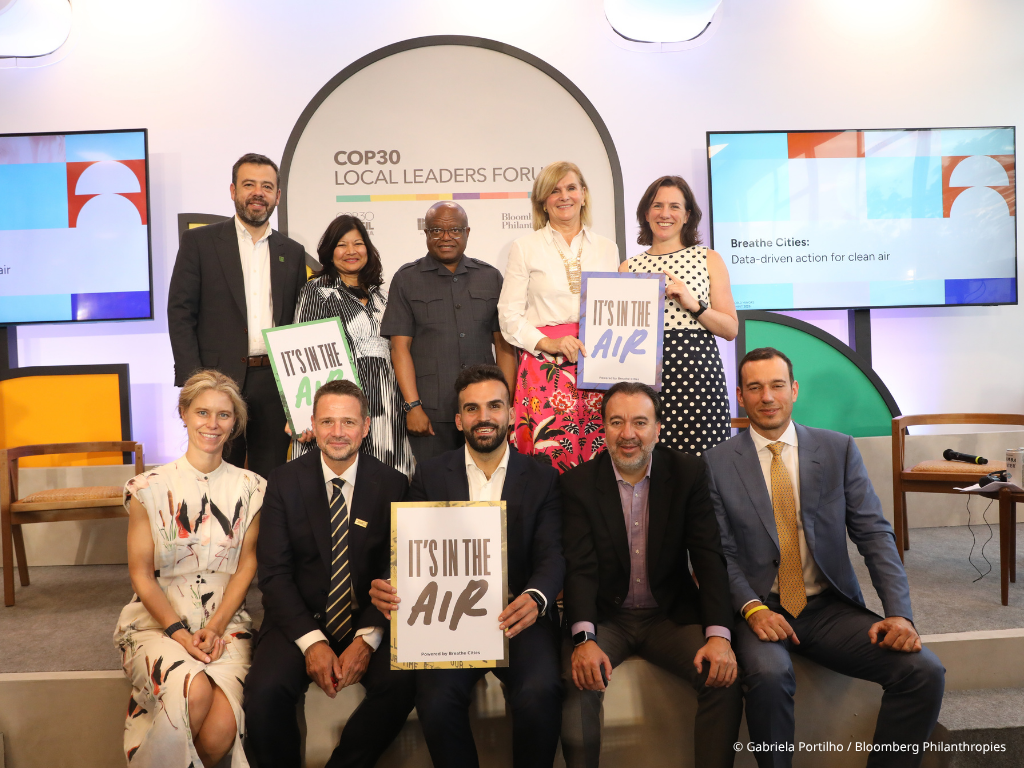
The announcement was made at a Breathe Cities workshop hosted in Mexico City, where the Secretary of Environment joined 28 city officials from 18 global cities, alongside Cecilia Vaca Jones, the Executive Director of Breathe Cities, and senior representatives from Bloomberg Philanthropies, C40 Cities, and Clean Air Fund. Discussions focused on how cities can maximise the use of data to inform ambitious and community-centered clean air policies and build public support.
The sensors will be deployed at community hubs across the city that bring millions of residents together for community-led cultural and recreational activities, as well as health services. Many of these sites are located in areas with the highest pollution burden and the least capacity to respond.
Breathe Cities will fund the sensors in the city and has provided technical advice to city authorities throughout the design of the network, including identifying areas where hyperlocal data can have the most impact.
While Mexico City’s existing monitoring network provides city-wide air quality data, it cannot capture neighbourhood-level variation where residents live and spend time. Low-cost sensors help close this gap by providing continuous, real-time data that enables authorities and communities to make place-specific and time-specific action to reduce exposure to pollution.
“We are pleased to make a very important announcement today. With Breathe Cities, we are working on deploying our first low-cost sensor network, which will allow us to have a much more granular picture of air quality across the city—not just where conventional monitoring stations are located, but in neighborhoods, schools, markets, and the spaces where people live. Because monitoring that doesn’t reach communities doesn’t serve communities,” said Lic. Julia Álvarez Icaza Ramírez, Secretary of Environment
The new sensor network will enable city authorities and community leaders to:
- Identify pollution hotspots at the neighbourhood level, expanding the city’s existing monitoring infrastructure
- Assess real-time exposure risks during outdoor sports, cultural events, and recreational activities
- Inform targeted interventions in the specific areas and time windows where residents are most at risk
- Raise awareness and empower communities with accessible, locally relevant air quality information to support advocacy and behaviour change
“We have seen in cities around the world that clean air action works — but only when it is grounded in data and driven by the communities most affected. By deploying sensors in the spaces where people live their lives, the city is building the evidence base to protect the people who need it most, and improve their wellbeing,” said Cecilia Vaca Jones, Executive Director of Breathe Cities.
Alongside the network launch, Breathe Cities published initial findings from an upcoming report “Strength in numbers: How cities are innovating through data to unlock ambitious clean air action”. The report will draw on real-world case studies from across the Breathe Cities network – including Mexico City – to provide a practical guide for city officials on how to use data to strengthen evidence-based decision making and build sustained public support for ambitious clean air interventions. The full report will be published including insights and examples from the Breathe Cities workshop.
“Cities need real-time, local data to take effective action on air quality,” said Priya Shankar, Environment Programme at Bloomberg Philanthropies. “Mexico City’s new sensor network – and the lessons from the Breathe Cities workshop – show that investing in data helps cities take faster, more targeted action to reduce pollution and protect public health.”
About Breathe Cities
Breathe Cities is a global initiative supporting cities to clean the air and enhance public health. Delivered by Bloomberg Philanthropies, Clean Air Fund and C40 Cities, the initiative offers cities tools to take ambitious clean air action by expanding access to data and raising public awareness. Launched in 2023 by Michael R. Bloomberg, the UN Secretary-General’s Special Envoy on Climate Ambition and Solutions and founder of Bloomberg Philanthropies, and Sadiq Khan, Mayor of London and C40 Cities Co-Chair, Breathe Cities is accelerating action in 14 cities to improve the air 77 million people breathe. To learn more, visit Breathe Cities’ website or follow on Instagram and LinkedIn.
Media Contact: [email protected]