Jakarta
Jakarta is the largest city in Indonesia and one of Southeast Asia’s most dynamic urban centres, home to over 10 million people. It is a regional hub for culture, commerce, innovation, but rapid growth, rising transport demand and industrial activity are driving high levels of air pollution across the city and its surroundings. Jakarta joined the Breathe Cities initiative in 2023 to help tackle these challenges by improving air quality data, driving forward clean air policies and working to protect the health of all who live and work in the city.


As part of the Breathe Cities cohort, I’m delighted to share that Jakarta continues to make meaningful strides in promoting inclusive climate and clean air actions – from expanding air quality monitoring and green open spaces, to engaging communities and developing Low Emission Zones that model sustainable urban growth. We’re also enhancing our Transjabodetabek (bus) program. These collective efforts demonstrate our strong commitment to shaping Jakarta’s future through clean air, green mobility and innovation.
Pramono Anung
Governor of Jakarta

Air pollution in Jakarta
Air pollution is a pressing challenge in Jakarta, impacting public health, the economy, and the environment. In 2024, the city’s air contained concentrations of harmful particles (PM2.5) that were around six times higher than the World Health Organisation’s recommended limit. These levels also regularly exceed Indonesia’s own national standards.
The majority of this pollution comes from transport and industrial activity. Vehicles are the largest source of PM2.5 (67%), nitrogen oxides (72%), and carbon monoxide (96%) in the city, while manufacturing contributes most of the sulphur dioxide (62%) due to fossil fuel use. Together, these sectors are responsible for nearly half of all particle pollution in Jakarta, with the heaviest impacts often falling on neighbourhoods close to busy roads and industrial zones.
In recent years, the effects of polluted air have become increasingly visible. Respiratory illnesses rose sharply between 2021 and 2023, with cases increasing sixfold in just one year. Studies estimate that exposure to air pollution is linked to over 5,000 hospitalisations each year, particularly among children, who are more vulnerable to asthma, bronchitis and other respiratory conditions.
The economic cost is just as concerning. In 2019 alone, air pollution was estimated to cost Jakarta nearly $3 billion through healthcare expenses, lost productivity, and other impacts. And while the entire city is affected, low-income communities are often hit hardest, with fewer resources to reduce their exposure or access care.
What we're doing in Jakarta
Breathe Jakarta is working alongside city officials, civil society and technical experts to clean the air and support a healthier future for the city’s residents.
We are supporting Jakarta to reduce emissions from leading pollution sources, particularly transport and industry, to ensure measurable improvements in air quality and public health. By scaling the use of low-cost air quality sensors, we’re making data more accurate, accessible, and locally relevant, helping identify pollution hotspots and understand who is most affected.
Breathe Jakarta is working with the city to strengthen and enforce efforts that can reduce emissions, such as vehicle emission testing and tackling industrial pollution. Building on Jakarta’s existing Low Emission Zone, we are helping the city with its efforts to design an integrated Low Emission Zone (Kawasan Rendah Emisi Terpadu). Unlike a typical Low Emission Zone that mainly restricts vehicles, this new holistic approach aims to combine multiple solutions such as better waste management, cleaner energy, smarter land planning, more green spaces and active community involvement.
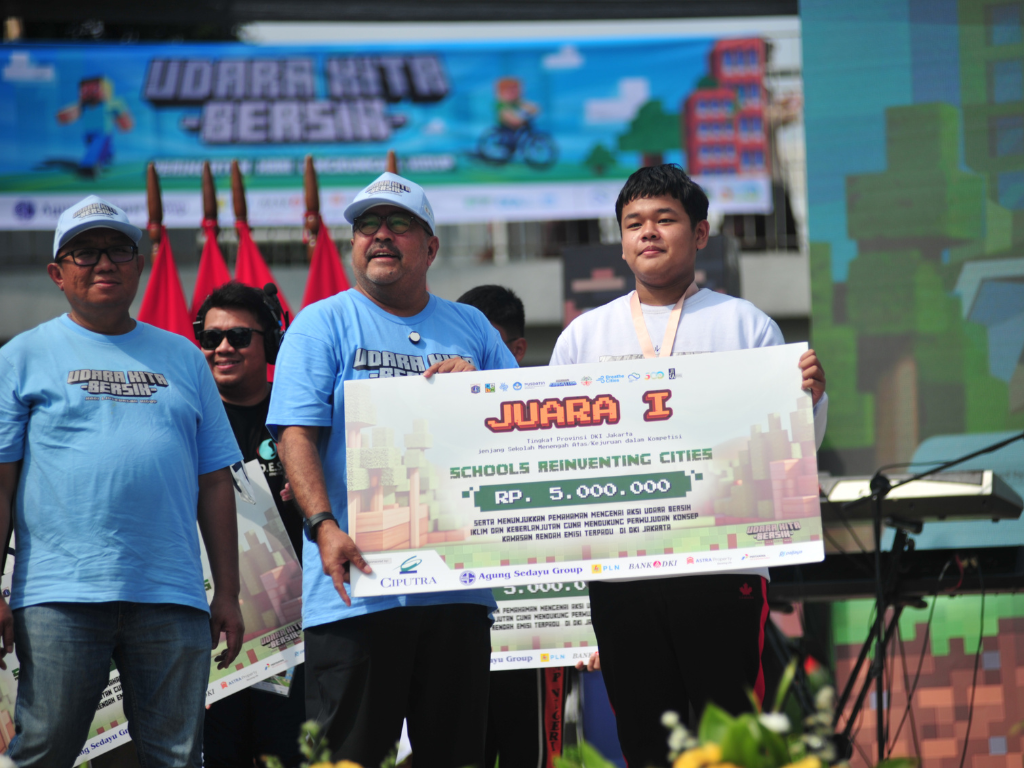
Jakarta’s communities are at the core of our efforts. We focus on neighbourhoods that experience the highest levels of air pollution to help bring cleaner air to those who need it most. Through partnerships with local communities and civil society organisations, we’re raising awareness about the health risks of air pollution and building public support for clean air policies through campaigns and school outreach.
Our work in Jakarta is co-implemented by Vital Strategies, in close collaboration with a range of local partners and community groups committed to cleaning the city’s air. Our partners include the Resilience Development Initiative, Ricardo, Itenas, Populix, Empatika, KatadataGreen, O2 Consulting, Universitas Padjadjaran, and CENIT–Techne Praxis. We also work hand-in-hand with the Jakarta Provincial Government, including the Environment Agency, Transport Agency, Health Agency, Education Agency, Development and Environment Bureau, Regional Cooperation Bureau and Legal Bureau.
Together, we’re ensuring clean air action that not only benefits Jakarta’s residents but also serves as a model for neighbouring cities across Indonesia. This collaboration is helping to shape a national movement toward cleaner air, delivering health and climate benefits that extend far beyond Jakarta city limits.

Related Posts
-
 Blog07/10/2025Jakarta
Jakarta Students Reimagine a Cleaner City with Minecraft
Through the Schools Reinventing Cities competition, more than 2,000 young people from 324 schools used… -
 Press Release15/11/2024Rio de Janeiro
Rio de Janeiro launches Breathe Cities initiative to tackle air pollution
Rio de Janeiro has launched the 'Breathe Rio de Janeiro' initiative to enhance air quality… -
 Press Release06/11/2025Bogotá
Breathe Cities Applauds the City of Bogotá, Earthshot Prize Winner
Colombian capital city honoured for its pioneering efforts to clean the air for eight million… -
 Press Release23/09/2024Global
The city of Bogotá joins Breathe Cities initiative to tackle global air pollution
Bogotá has joined the Breathe Cities initiative to enhance air quality for its 7.9 million…